
After eight years of framing houses off Charleston Blvd, the lower back pain finally won. Maybe yours started differently, a rear-end crash on the 215 near Henderson, or a back surgery years ago that never delivered the relief you were promised. Whatever the path that brought you here, you’re now asking a fair question: is spinal cord stimulator worth it for chronic pain that nothing else has touched?
At the Center for Wellness & Pain Care (CWPC), Dr. Neville Campbell, M.D./M.B.A., and his team help patients across Las Vegas and Henderson make that decision with clear information, not pressure. We focus on non-surgical, evidence-based interventional pain management. Spinal cord stimulation (SCS) is one option among several, and it isn’t right for everyone. You don’t have to live with chronic pain to find out which path makes sense for you.
What Is Spinal Cord Stimulation? A Plain-English Guide for Nevada Patients
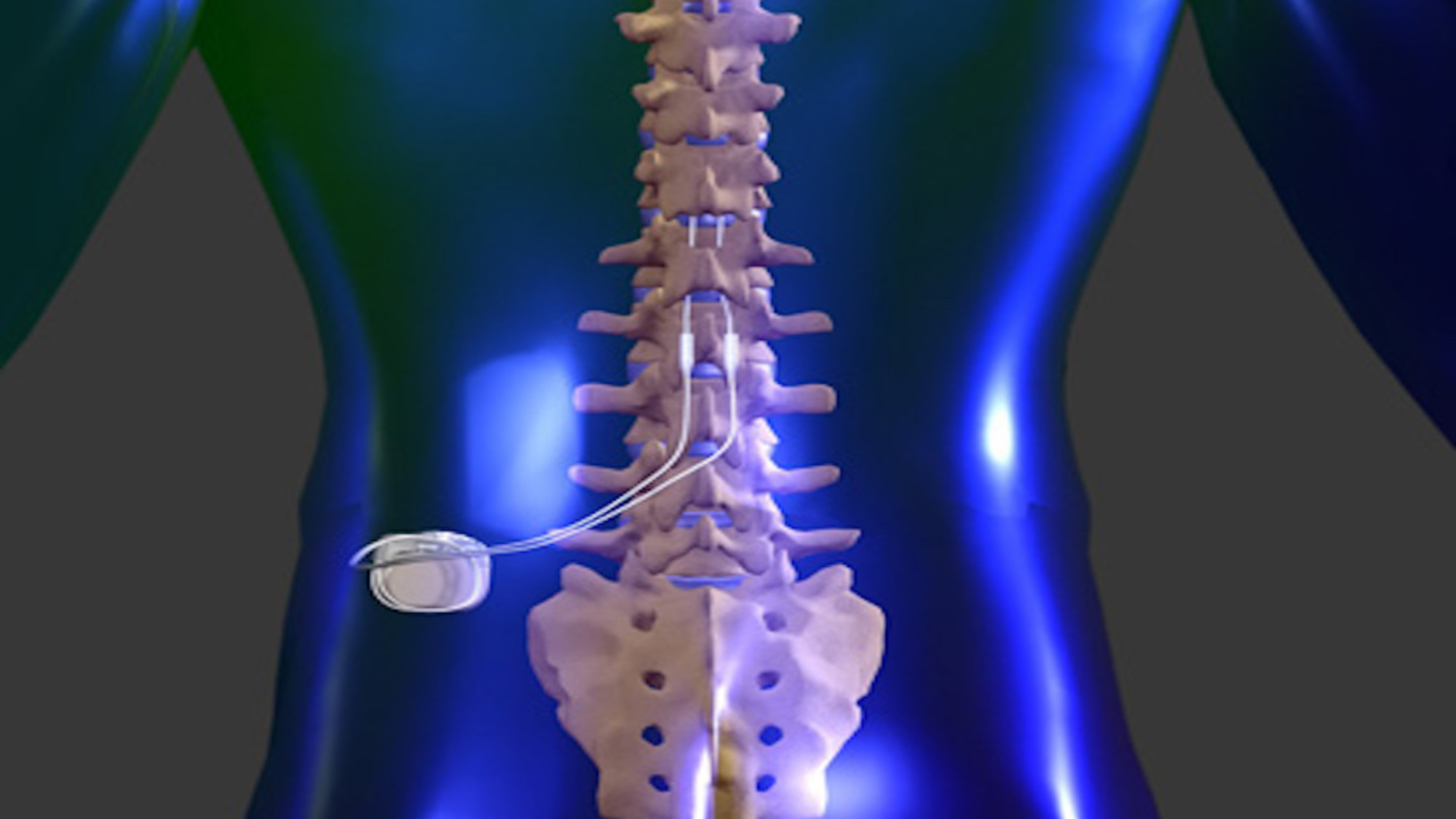
A spinal cord stimulator is a small implanted device that sends mild electrical pulses to nerves in your spine. Those pulses interrupt or mask the pain signals before they reach your brain. Think of it like a dimmer switch — it doesn’t turn off the lights, but it can lower the glare to something you can live with.
The system has two parts: thin wires (leads) placed near the spinal cord, and a small generator (about the size of a pacemaker) implanted under the skin. Before any permanent device goes in, patients first try it with an external trial unit worn for about a week. If pain drops by at least 50% during that trial, the permanent system is usually a reasonable next step.
In Clark County, the people asking whether a spinal cord stimulator is worth it tend to share a story. Many had a workplace injury at a Strip construction site or a heavy jobsite off Sunset Road. Others were rear-ended on US-95 or I-15 and developed nerve pain that didn’t fade. Some had back surgery years ago and never got their life back.
Signs You Might Be a Candidate for Spinal Cord Stimulation
Not everyone with back pain needs a stimulator. But the following patterns often suggest it’s a conversation worth having:
- Burning, shooting, or electric pain that travels down a leg or arm — especially the kind that flares after stop-and-go traffic on the 215 during the drive home to Green Valley.
- Pain that survived back surgery (sometimes called failed back surgery syndrome) — when the operation healed your scan but not your symptoms.
- Nerve pain from an old auto accident that hasn’t responded to injections, physical therapy, or medication after months of trying.
- Diabetic neuropathy with constant tingling or burning in the feet that wakes you up at night in your Sun City Anthem home.
- Complex regional pain syndrome (CRPS) following an injury or surgery, where the affected limb feels swollen, sensitive, and out of proportion to what happened.
- Pain that has limited your work for six months or longer — for example, a construction supervisor near Centennial Hills who can no longer climb scaffolding without sharp leg pain.
- You’ve tried multiple conservative treatments without lasting relief — injections, RFA, therapy, medication — and surgery either isn’t an option or didn’t help last time.
If two or more of these sound familiar, asking whether a spinal cord stimulator is worth it is the right next question. The trial period gives you a real answer before any permanent commitment is made.
How CWPC Treats Chronic Pain (Non-Surgical Focus)
Before recommending SCS, Dr. Campbell’s team usually walks through the full non-surgical menu. Many patients find relief earlier in the process and never need a stimulator. Here’s how we approach chronic pain at CWPC:
- Epidural Steroid Injections — These deliver anti-inflammatory medication directly to the irritated nerves around your spine. For disc-related pain or sciatica flares after lifting at a Henderson warehouse, they’re often the first interventional step.
- Radiofrequency Ablation (RFA) — RFA uses heat from a thin needle to disable specific pain-carrying nerves. Many patients with facet joint pain from years of trades work get six months to two years of relief from a single treatment.
- Stem Cell Therapy / Regenerative Medicine — These treatments use the body’s own healing cells to repair damaged tissue. They’re an option for joint pain, mild disc degeneration, and certain soft-tissue injuries from sports or auto accidents.
- Spinal Cord Stimulation (SCS) — When other interventions haven’t held, SCS can mask the pain signals before they reach the brain. The trial period is the honest answer to whether a spinal cord stimulator is worth it for your specific case — you test it before you commit to anything permanent.
- Medication Management — Carefully monitored, non-opioid-first approaches help control pain while you work through other treatments. We avoid long-term opioid dependence whenever possible.
- Physical Therapy Referral — Stronger core and back muscles support every other treatment. We coordinate with trusted PT clinics across Summerlin, Spring Valley, and Green Valley.
The goal is the smallest effective treatment — not the most aggressive one. Dr. Campbell’s team builds a personalized treatment plan around what you’ve already tried, your imaging, and your daily life.
Why Las Vegas & Henderson Patients Trust CWPC for Chronic Pain Care
Dr. Neville Campbell brings something most pain clinics don’t: a combined M.D./M.B.A. background. The medical side delivers careful, interventional expertise. The business side keeps the practice efficient — meaning shorter waits, faster insurance processing, and clear communication about what each treatment will cost you.
That matters when you’re trying to get back to work, back to family life, or back on the trails at Red Rock.
CWPC accepts most of the plans Clark County patients carry. That includes Medicare, Nevada Medicaid, Aetna, Cigna, UnitedHealthcare, Anthem BCBS, HPN, and Prominence. We also handle Nevada workers’ compensation and accept auto liens (LOA) for personal injury cases — important if you’re recovering from a crash on the Bruce Woodbury Beltway and haven’t settled your claim yet.
You also don’t need a primary care referral to see us. Nevada is a self-referral state, so you can call (702) 476-9700 today and start the process without waiting on paperwork from another doctor. That’s a big deal when you’re trying to get back a paycheck.
Meet Dr. Neville Campbell: The Physician Behind CWPC
Dr. Neville Campbell, M.D./M.B.A., founded CWPC with a clear mission: relieve chronic pain and restore health, comfort, and quality of life for patients across Clark County.
He’s a recognized leader in interventional pain management, with deep training in the procedures most likely to help patients avoid major surgery — including epidural injections, RFA, regenerative therapies, and spinal cord stimulation trials. His M.B.A. background shapes the practice in quieter ways too: clear billing, organized appointment flow, and a team trained to treat each patient like a person, not a chart number.
The CWPC team works collaboratively. Patients see nurse practitioners, the physician, and support staff who coordinate with each other — so your imaging, history, and treatment plan don’t fall through the cracks between visits.
Frequently Asked Questions About Spinal Cord Stimulation
- Can chronic pain be managed without a spinal cord stimulator?
Yes — less invasive treatments are usually tried first. Many patients find lasting relief through epidural injections, RFA, regenerative medicine, or physical therapy before SCS is ever considered.
- Does CWPC accept my insurance for spinal cord stimulator evaluations?
We accept Medicare, Nevada Medicaid, Aetna, Cigna, UnitedHealthcare, Anthem BCBS, HPN, and Prominence. We also handle workers’ compensation and auto liens. Call (702) 476-9700 to verify your specific plan.
- How quickly can I get an appointment in Las Vegas or Henderson?
Same-day or next-business-day appointments are often available for workers’ comp and auto accident patients. Standard appointments are typically scheduled within about a week.
- Do I need a referral from my primary care doctor?
No. Nevada is a self-referral state, so you can book directly with CWPC without paperwork from your PCP. Just call us to get started.
- What results can I expect from spinal cord stimulation?
Many patients who pass the trial period report 50% or greater pain reduction. Results vary based on the underlying condition and individual response, which is exactly why the trial step exists.
- How long does the spinal cord stimulator trial take?
The trial usually lasts about five to seven days. The leads are placed in a short outpatient procedure, and you wear an external device at home to test whether the therapy improves your daily life.
- Do you treat auto accident-related pain with liens/LOA?
Yes. CWPC accepts auto liens for patients whose injury claims haven’t settled. We regularly work with personal injury attorneys across Clark County.
- Do you accept Nevada workers’ compensation?
Yes. CWPC treats workers’ compensation patients across construction, hospitality, and trades, and handles claims paperwork directly so you can focus on recovery.

Add a Comment